
 English
 Pусский
 हिन्दी
 українська
 Search

chemical use valve
Chemical Use Valves: Function, Types, and Applications Valves play a critical role in chemical processing, ensuring safe and efficient control of fluid flow in corrosive, toxic, or high-pressure environments. Designed to withstand harsh conditions, chemical use valves must resist degradation, leakage, and failure while maintaining precise operation. Key Functions 1. Flow Control: Regulates the rate and direction of chemical flow. 2. Isolation: Blocks flow during maintenance or emergencies. 3. Pressure Management: Prevents overpressure or vacuum conditions. 4. Contamination Prevention: Maintains purity by avoiding cross-contamination. Common Valve Types for Chemical Applications 1. Ball Valves: - Design: A rotating ball with a bore for on/off or throttling control. - Advantages: Tight sealing, low maintenance, and compatibility with aggressive media. - Materials: PTFE-lined bodies, stainless steel, or alloys like Hastelloy. 2. Diaphragm Valves: - Design: A flexible diaphragm isolates fluid from internal components. - Advantages: Leak-proof, ideal for slurries or high-purity fluids. - Applications: Pharmaceutical, wastewater, and abrasive chemical handling. 3. Butterfly Valves: - Design: A disc rotates 90° to modulate flow. - Advantages: Compact, cost-effective, and suitable for large pipelines. - Limitations: Limited to low-pressure throttling in corrosive services. 4. Check Valves: - Design: Allows unidirectional flow to prevent backflow. - Variants: Swing, lift, or dual-plate designs for varying pressures. 5. Globe Valves: - Design: Linear motion disc for precise throttling. - Advantages: Excellent shutoff and flow regulation. - Challenges: Higher pressure drop compared to ball valves. Material Selection Chemical compatibility is paramount. Common materials include: - Metals: 316 stainless steel, titanium, nickel alloys. - Plastics: PVDF, PP, PTFE for corrosion resistance. - Lining Options: Rubber, PFA, or ceramic coatings for added protection. Safety and Standards Valves must comply with industry standards (e.g., ASME, API, ISO) and undergo rigorous testing for leaks, pressure ratings, and temperature limits. Features like fire-safe designs and fugitive emission controls are critical for hazardous environments. Conclusion Chemical use valves are engineered for reliability under extreme conditions. Proper selection based on fluid properties, pressure, temperature, and operational requirements ensures longevity and safety in chemical processing, oil and gas, and water treatment industries. Advances in materials and smart valve technologies continue to enhance performance and monitoring capabilities. (Word count: 500)
Sản phẩm
Danh mục:
-
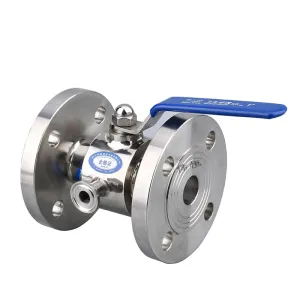
insulation sanitary ball valve for chemical use
Phân loại của họ: Sanitary Ball ValveLượt xem: 9Số:Thời gian phát hành: 2025-11-13 14:26:16In modern processing environments, industries that handle aggressive chemicals, acids, alkalis, or solvents require valves that are both hygienic and chemically resistant. The insulation sanitary ball valve for chemical use is engineered to provide: Hygienic design for sanitary processes High chemical resistance for aggressive media Insulated body for temperature-sensitive fluids Automated or manual operation for process control These valves are widely used in chemical, food & beverage, pharmaceutical, and cosmetic industries, offering reliable, leak-proof, and safe control of chemical and product flow while maintaining full compliance with sanitary standards.
Tin tức
Danh mục:
-
[Company News]How to Identify Quality in a Forged Sanitary Valve
2025-11-19 08:31:42
Trường hợp
Danh mục:
Không có kết quả tìm kiếm!
Video
Danh mục:
Không có kết quả tìm kiếm!
Tải về
Danh mục:
Không có kết quả tìm kiếm!
Tuyển dụng
Danh mục:
Không có kết quả tìm kiếm!
Sản phẩm được đề xuất
Không có kết quả tìm kiếm!



 Điện thoại